How Grez grew revenue per visitor +63% in 30 days by guiding every shopper to the right supplement
Supplements are one of the busiest categories in Chilean e-commerce, and new brands keep arriving. Grez used Pathmonk to turn more of its traffic into sales, match each campaign with its own message, and see which paid clicks came from real people.
Clean-label supplements from a founder Chile already knows
Grez, also known as The Grez Way, is a Chilean supplement brand founded by Pedro Grez, a bestselling author whose method and books have a large following in Chile. The formulas are made and packaged in Chile, with no fillers or added sugar, and the brand is positioned as clean label.
The store is organised around what people want to improve: sleep, stress, strength, metabolism, digestion, focus and more. Shoppers can buy single formulas, packs or subscriptions. The website has one job, the online purchase, and the number that matters is how much revenue each visitor brings.
The challenge: a booming category, crowded by the month
Supplements are having their moment in Chile. Demand is high, many brands are growing fast and new ones appear all the time. Grez starts with an advantage most of them do not have: a founder people already know and trust. But a known name does not stop competitors from buying the same searches and the same audiences. Grez wanted to lead its market, not share it.
- Competitors with years of ads behind them. Established rivals in Chilean search run ads that have stayed live for close to three years, a sign that they work. Grez needed to know what it was up against
- A wide catalogue, organised by goal. A shopper who wants to sleep better or manage stress still has to work out which formula, pack or subscription fits them. Without guidance, it is easy to leave before deciding
- Paid traffic at volume, quality unknown. Grez runs significant campaigns on Meta, TikTok and Google. The ad platforms report clicks; they do not report which clicks came from a person
- Proof in revenue, not clicks. For an online store, more visits or more add-to-carts mean little on their own. The result had to show up in revenue
The objective: convert more of the traffic Grez already pays for, raise what each visitor is worth, and know which paid clicks are real shoppers.
The solution: guide every shopper, see every click
Pathmonk went live on Grez’s store on 21 September 2026. The work ran in three parts: research the competition, convert more visits into purchases, and analyze the buying journey and the paid traffic behind it.
Research
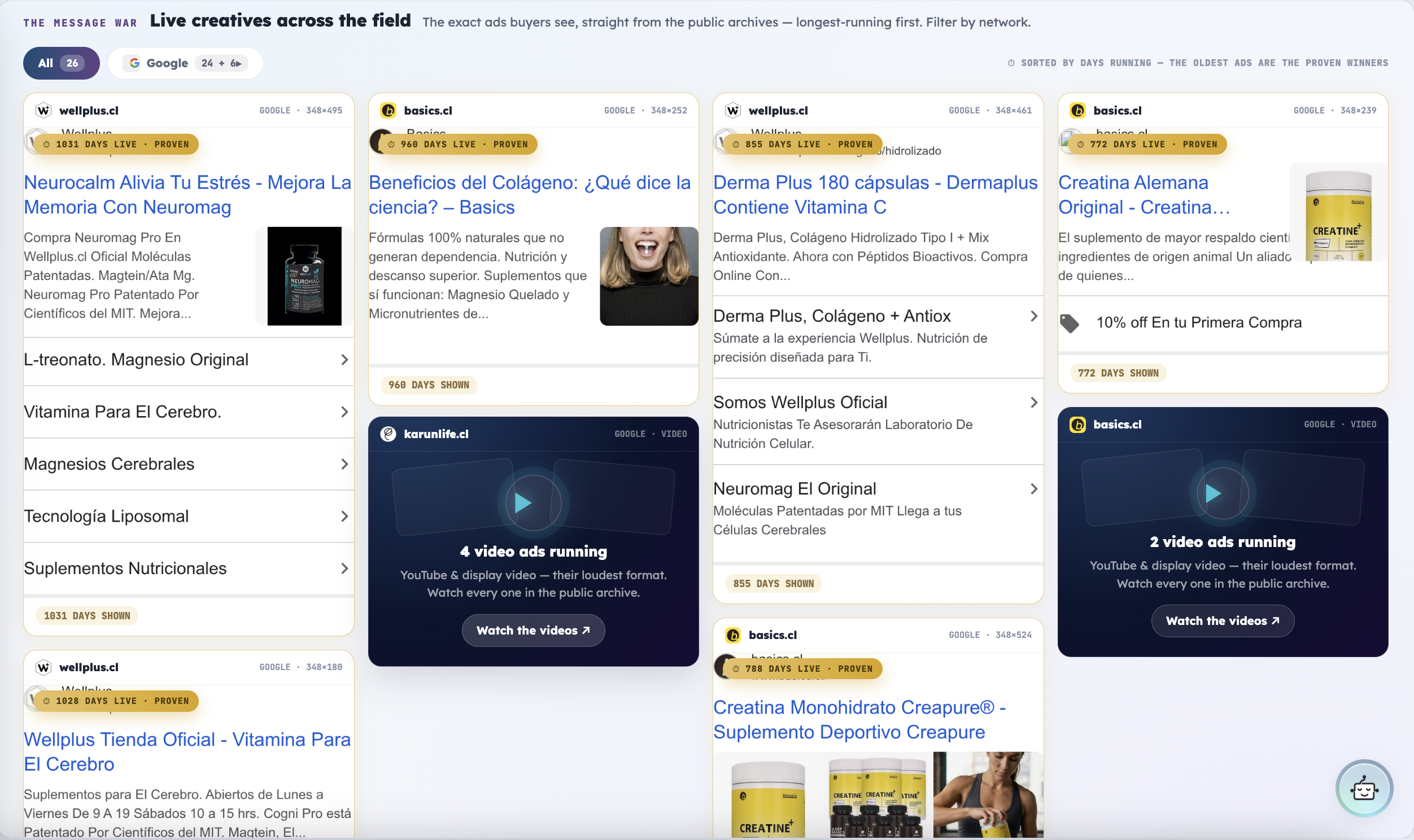
Competitor Spy shows the live ads Grez’s competitors run, longest-running first.
Competitor SpyConvert
Layered microexperiences lead each shopper to a product selector that finds the right formula. Campaign microexperiences give each campaign its own cards.
Layered microexperiencesCampaign microexperiencesProduct selectorAnalyze
The buying journey review measures the A/B test on verified visitors. Paid clicks quality shows, by campaign, which paid visitors behaved like people.
Buying journey analyticsPaid clicks qualityResearch · Competitor Spy
Know what the competition says, and for how long. In a crowded category, a brand needs to know which messages its rivals rely on. Competitor Spy shows Grez the live ads its competitors run, taken from the public ad archives and sorted by days running, because the ads that stay live longest are the ones that work. In Chilean search that includes Wellplus, Basics and Karunlife, with some ads live for more than 1,000 days. Grez sees the claims, products and offers each rival leads with, and can position its own campaigns against them.
Convert · Layered microexperiences
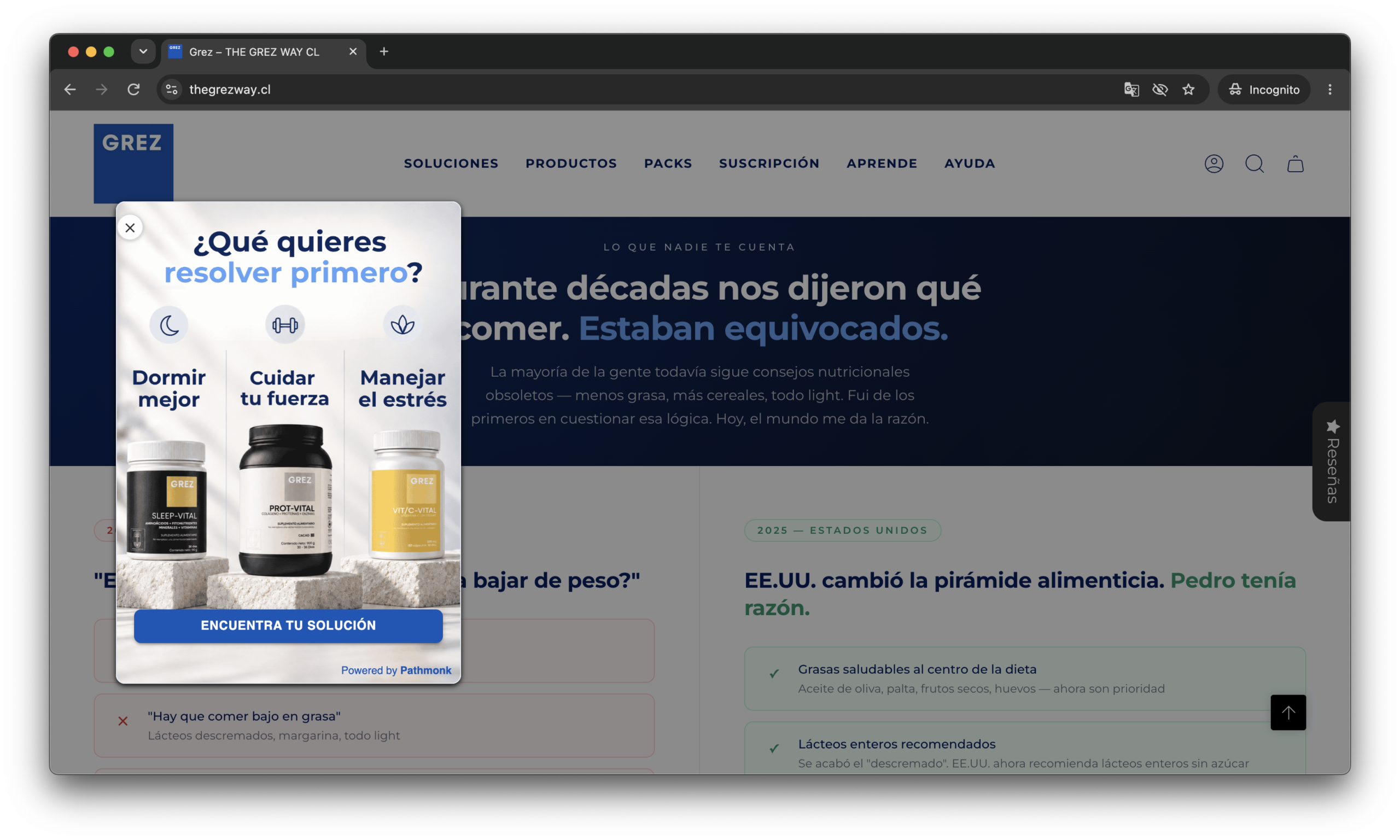
One question, then the right formula. Layered microexperiences appear on top of the page at the right moment of the visit, adapted to where the shopper is in their decision. The welcome microexperience asks a single question: what do you want to solve first? Sleep better, look after your strength or manage stress, each with the formulas that go with it.
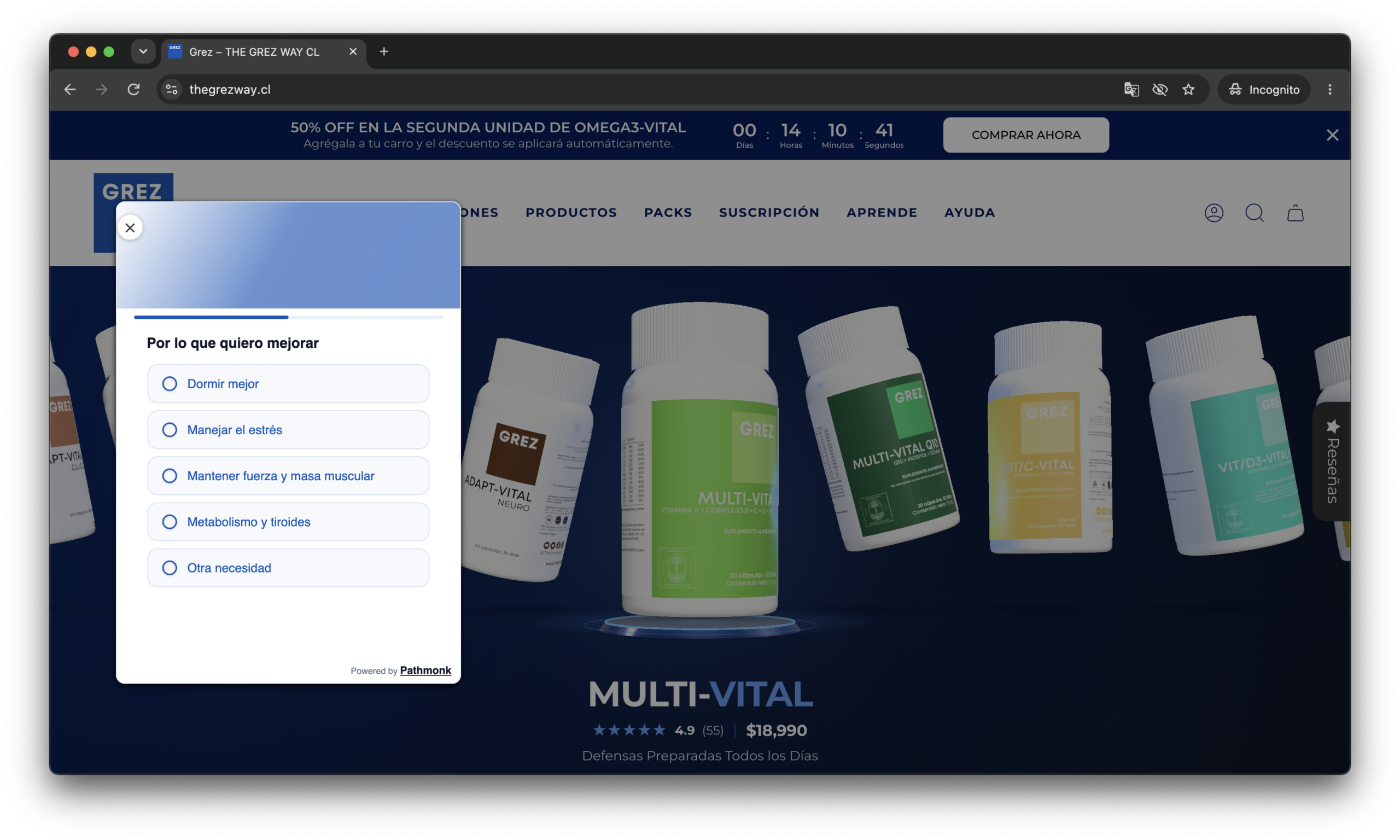
Every layered microexperience, at every stage of the visit, opens the same tool: a product selector. It starts from what the shopper wants to improve (sleep, stress, strength and muscle mass, metabolism and thyroid, or another need) and narrows a wide catalogue down to the formulas that fit. Instead of browsing categories, the shopper answers a few questions and gets a recommendation.
Convert · Campaign microexperiences
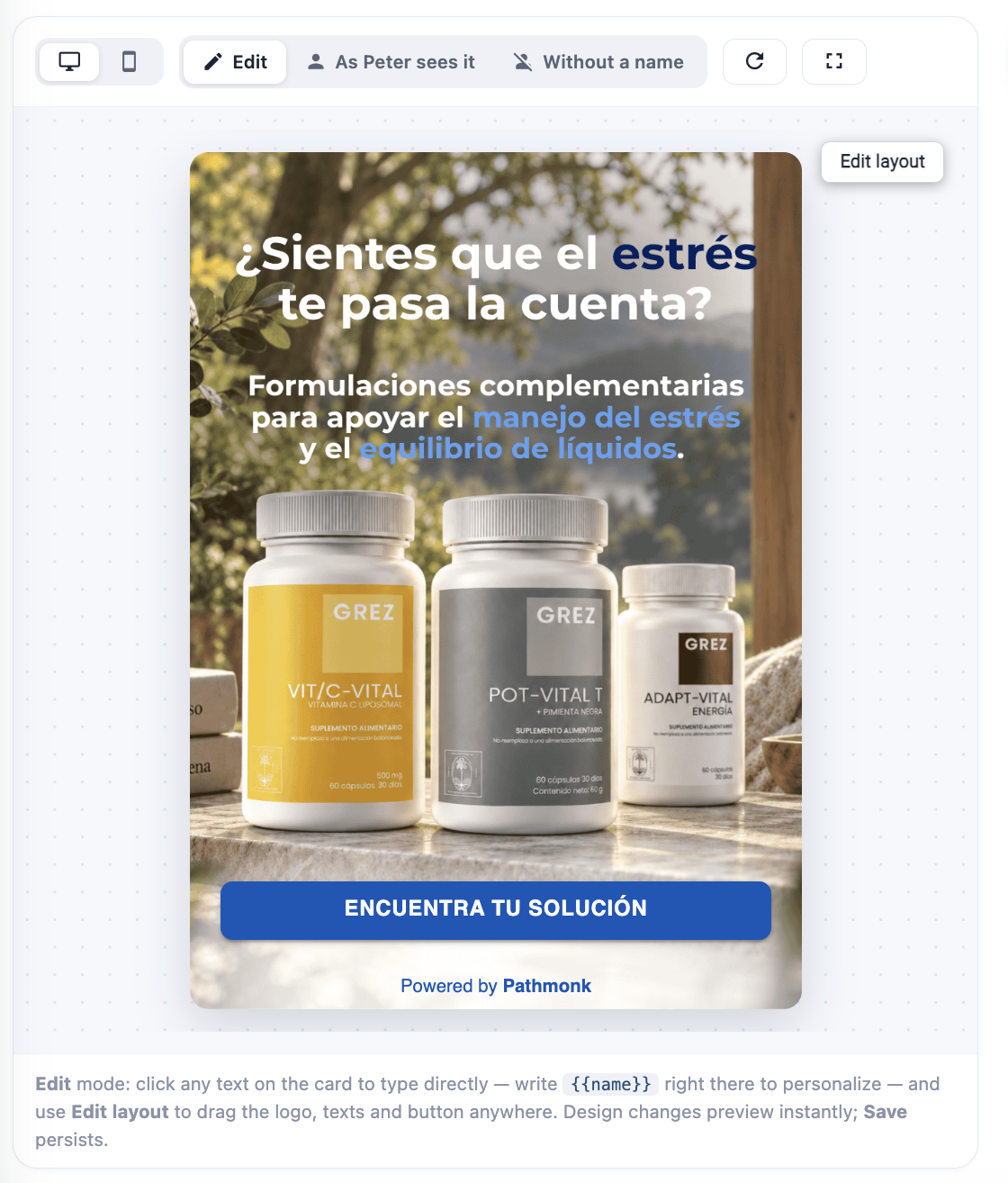
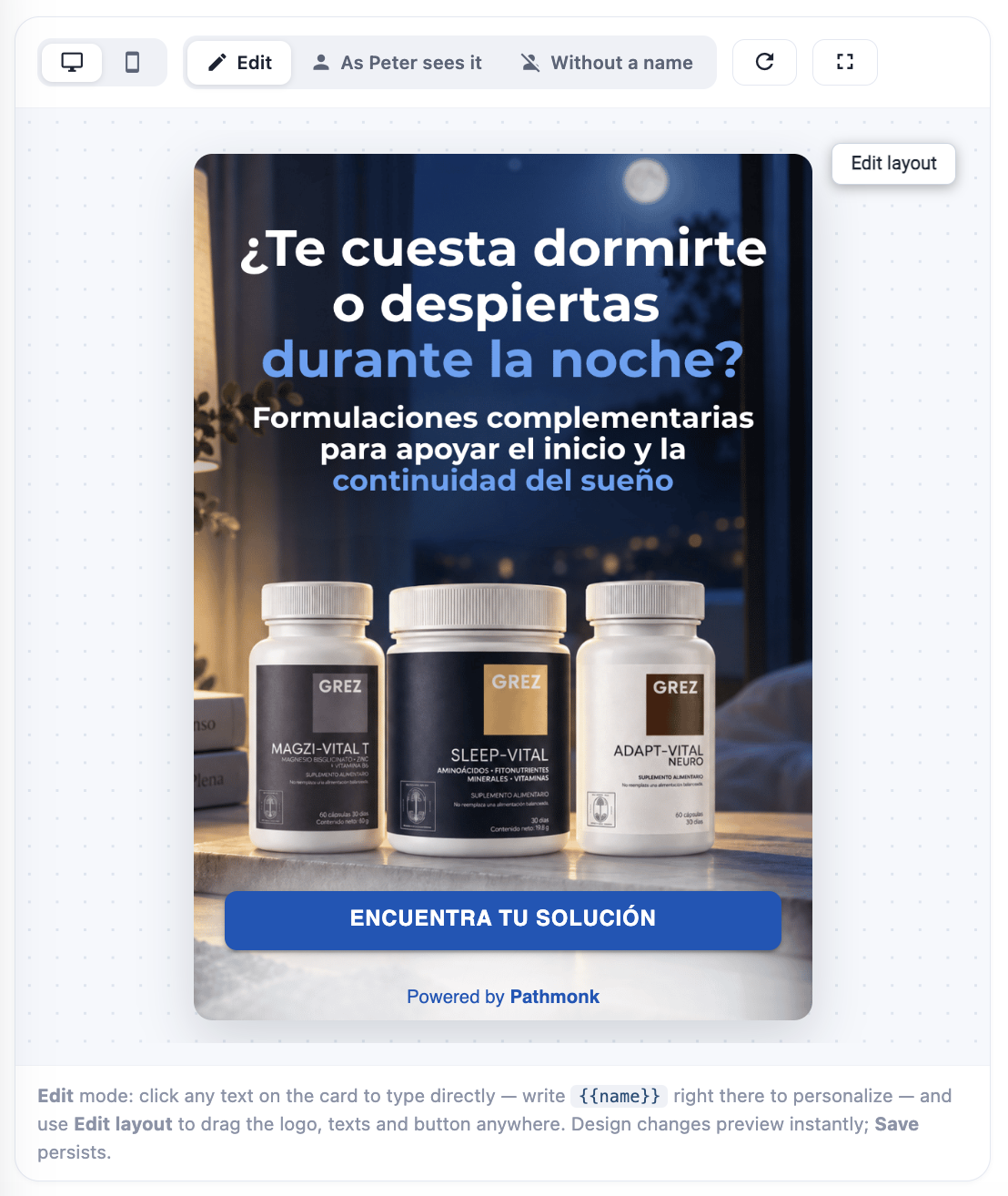
The page opens on the promise the ad made. Grez runs campaigns around specific needs, such as stress or sleep. With campaign microexperiences, a visitor who arrives from one of those campaigns only sees cards made for it. Someone who clicked a stress ad is asked whether stress is catching up with them and shown the stress formulas. Someone who clicked a sleep ad is asked whether they struggle to fall asleep or wake up during the night, and shown the sleep formulas. No generic welcome, no detour.
Analyze · Buying journey and paid clicks
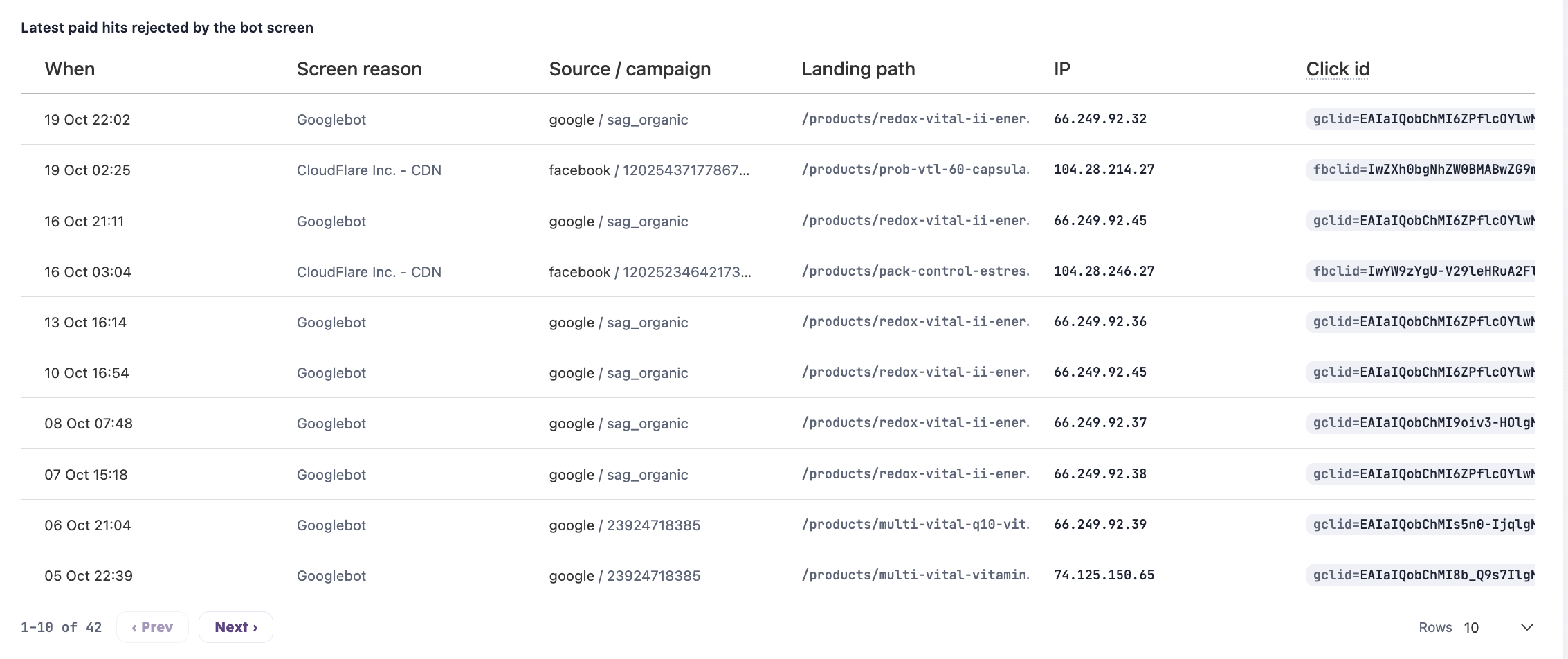
Measured on real people. The buying journey performance review compares the Pathmonk group with a control group on verified visitors only: the people whose behaviour on the site Pathmonk recognised as human. Prefetchers, background loads and traffic that arrives and leaves without a single gesture have no journey to measure, so they stay out of the comparison. Paid clicks quality applies the same lens to advertising: of every visitor whose first visit came from a paid click, how many never showed human behaviour, and how many hits the bot screen rejected, by source and campaign. The results are in the next chapter.
The results: +63% revenue per visitor in 30 days
The A/B test ran from 22 September to 21 October 2026, starting the day after go-live so that no setup-day data mixed in. Traffic was split between a control group that saw the standard website (49%, 15,956 visitors) and a Pathmonk group (51%, 16,810 visitors). Both groups count verified visitors only, and on the Pathmonk side the comparison counts the verified visitors who saw a microexperience. 6,085 bot visits were excluded from both groups. The goal was the same for both: a product sale.
All revenue figures are converted from Chilean pesos to US dollars at about 970 CLP per USD, the average rate for the test window.
Each verified visitor who saw a microexperience brought $6.67 in revenue, against $4.10 in the control group: +62.6% revenue per visitor, or $2.57 more for every visitor. Across the 4,219 visitors in the Pathmonk group, that is about $10,800 in extra revenue in 30 days.
Purchases grew too. The Pathmonk group converted at 7.44% against 5.11%, a +45.7% uplift, and produced more purchases (314) from fewer verified visitors than the control group (297).
Bigger orders, not just more of them. Revenue grew faster than purchases, so the average order went up: about $90 in the Pathmonk group against about $80 in the control group, roughly 12% more. Shoppers guided to the formula that fits their goal bought more often, and spent more each time.
Share of verified visitors reaching each stage, Pathmonk group vs. control group, 22 September to 21 October 2026.
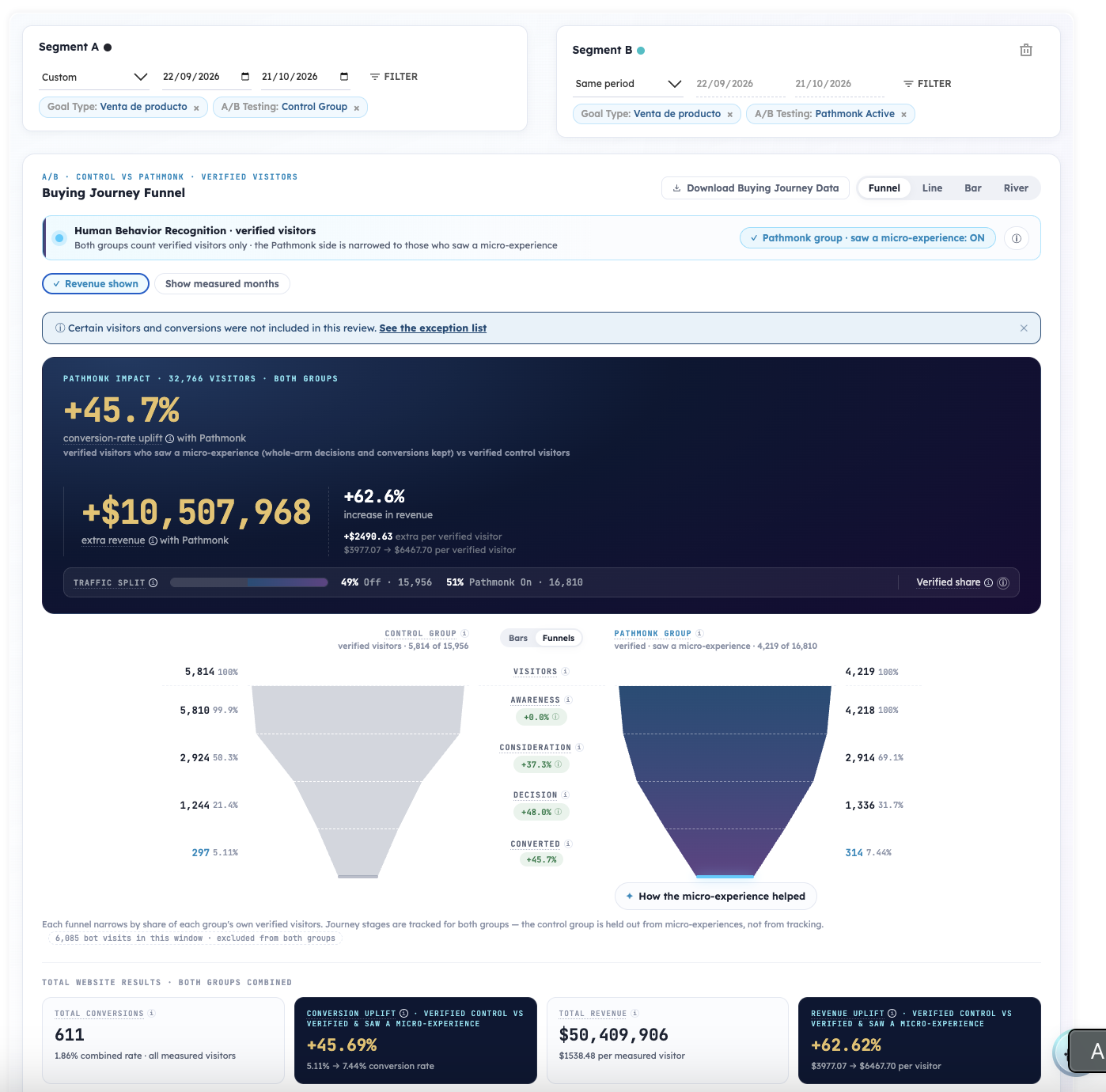
The lift starts early in the visit and carries through. 69.1% of the Pathmonk group reached the consideration stage against 50.3% of the control group, and 31.7% reached the decision stage against 21.4%. Guidance early in the visit carried through to the purchase.
Paid traffic quality
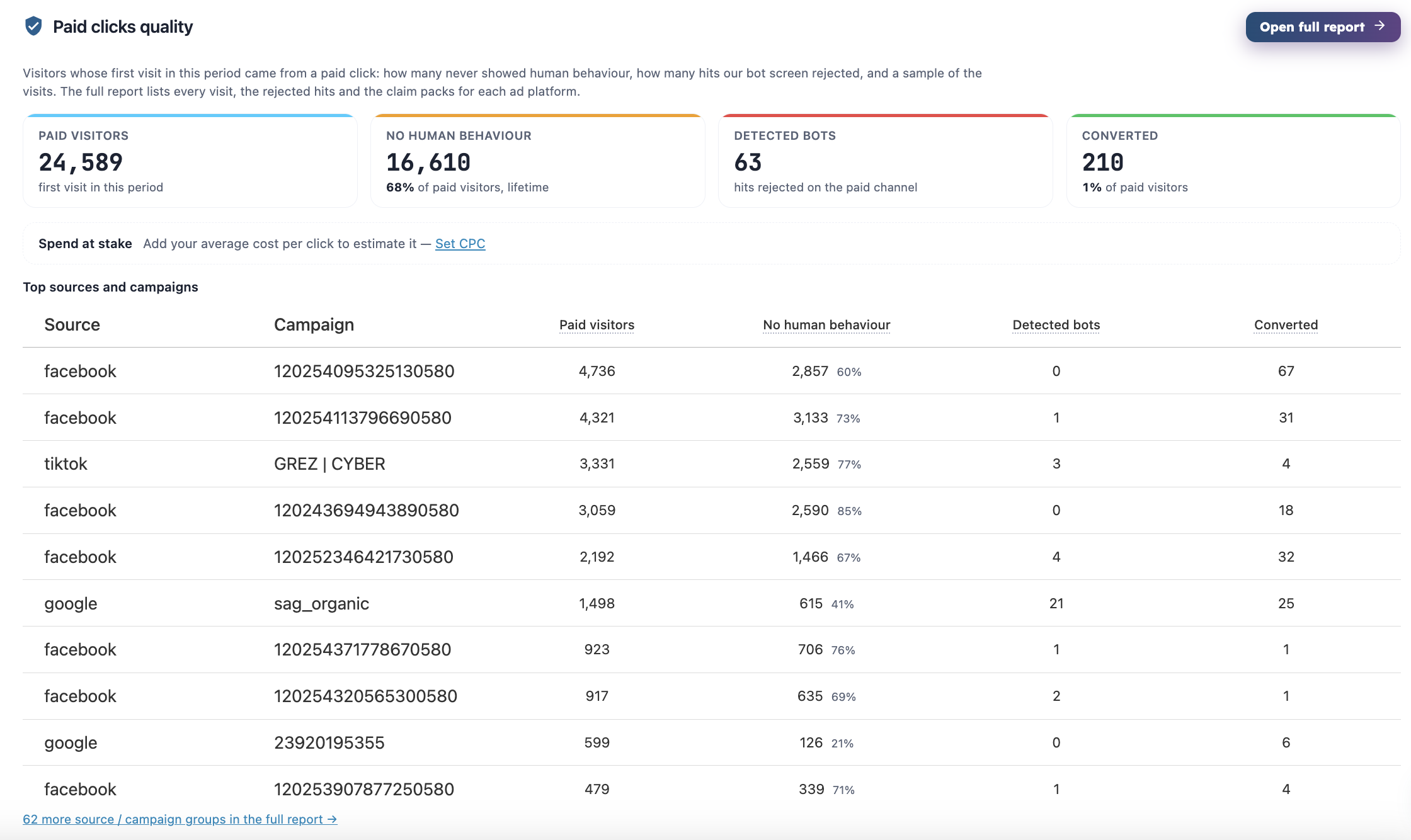
What the paid clicks were really worth. In the same period, 24,589 visitors arrived on Grez’s store for the first time from a paid click. 16,610 of them, 68%, never showed recognisable human behaviour on the site: no sustained interaction with any page. The bot screen rejected another 63 hits on the paid channel. 210 paid visitors converted.
The split by campaign is where it becomes useful. On one Facebook campaign, 85% of its 3,059 paid visitors showed no human behaviour. The TikTok campaign “GREZ | CYBER” brought 3,331 paid visitors, 77% of them without human behaviour, and 4 conversions. The strongest Facebook campaign, by contrast, turned 4,736 paid visitors into 67 conversions. For a store buying traffic on Meta, TikTok and Google, that is the difference between budget that reaches shoppers and budget that does not.
From report to claim. The full report lists every rejected hit with its time, screen reason, campaign, landing page and click ID, and prepares a claim pack for each ad platform. Grez used this information to file claims with its ad platforms. Approved claims come back as credits on a later invoice, not refunds, and Google reviews clicks from the last 60 days at most, so filing early matters. See how Pathmonk improves results across paid campaigns in the PPC case study.
What’s next: personalization inside the page
Grez’s next step is in-page microexperiences, Pathmonk’s newest personalization feature. Instead of appearing on top of the website, in-page microexperiences show personalized content inside the page itself, so the store adapts to each shopper’s goal as they browse. The layered and campaign microexperiences stay in place, and paid clicks quality keeps watching every campaign, so ad spend stays measured against real shoppers.
Get results like these on your website
Install in minutes through GTM, run a clean A/B split, and see the uplift for yourself. Cookieless, no dev work needed.
More customer stories
 Health e-commerce
+65%more purchases
How Tivic Health lifted online purchases from 1.53% to 2.54%.
Read the story E-commerce
+61%more sales
How ChocoVivo grew online sales in 30 days.
Read the story B2B e-commerce
+78%more revenue
How Fabric House grew revenue in its first week with Pathmonk.
Read the story